
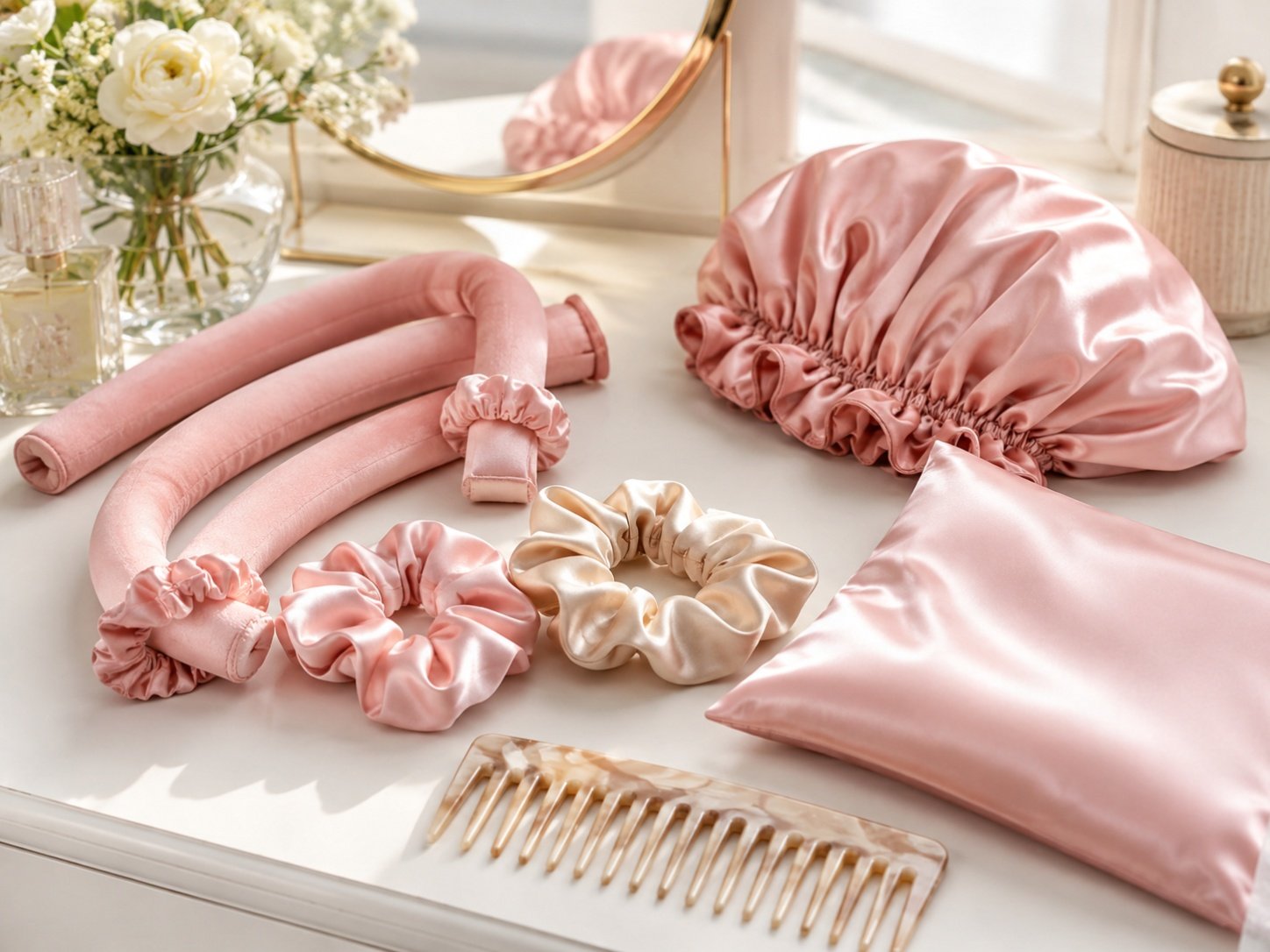
Heatless hair finds can make mornings so much easier, especially if you wake up with frizz, flat roots, tangled ends, or curls that need too much fixing. Instead of reaching for a curling iron or flat iron every day, a few simple overnight tools can help your hair look smoother and more styled when you wake up.
My favorite heatless hair finds for better morning hair are heatless curlers, satin scrunchies, and a silk pillowcase. Those three are the best places to start because they help with shape, gentle hold, and friction while you sleep.
The American Academy of Dermatology recommends letting hair air-dry when possible, using the lowest heat setting when heat tools are needed, and using hot tools less often because excessive heat can damage hair. That is why I like building a gentle routine around heatless styling whenever possible.
Why Heatless Hair Finds Are Worth Trying
Heatless styling is not about waking up with perfect hair every single morning. It is about making your hair easier to manage with less daily heat.
In my experience, the best heatless routine does three things well:
- Reduces friction while you sleep
- Holds your hair gently without tight pulling
- Creates or preserves shape overnight
This matters because rough handling, too much heat, and tight styles can all affect how your hair looks and feels. The American Academy of Dermatology notes that blow dryers, hot combs, and curling irons can contribute to hair damage and recommends using these tools less often when possible.
You do not need to buy every heatless hair tool at once. I would start with the product that solves your biggest morning problem first. If your hair is flat, try heatless curlers. If your hair is frizzy, try a silk or satin pillowcase. If regular hair ties leave dents or pull, start with satin scrunchies.
1. Heatless Curlers
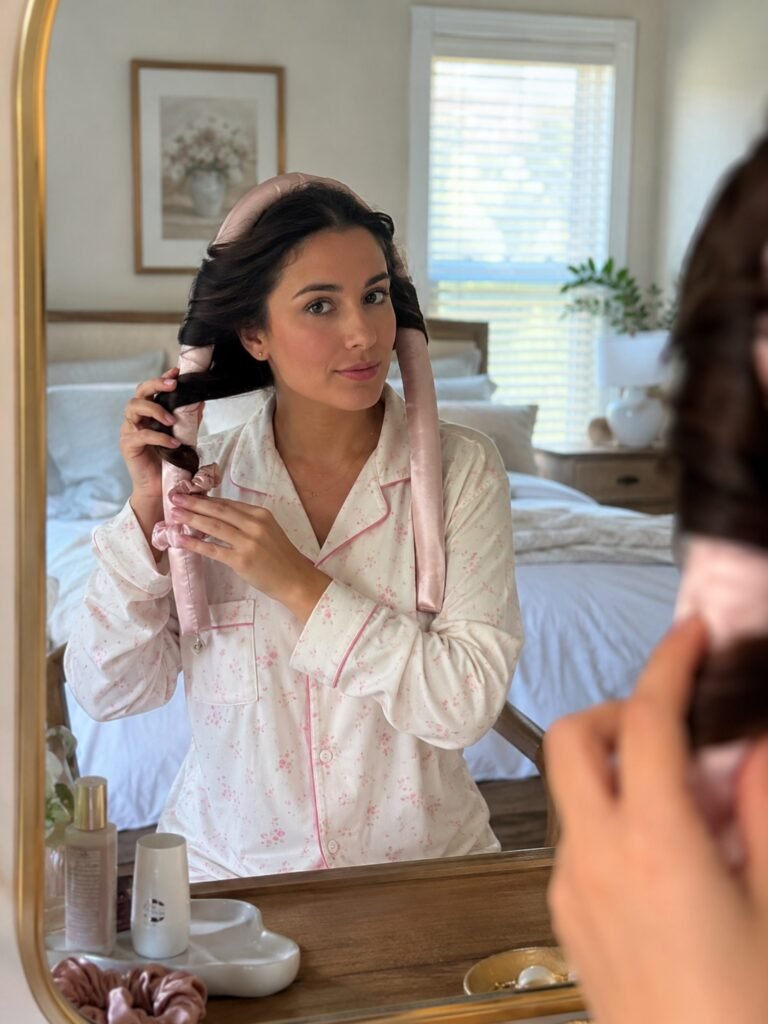
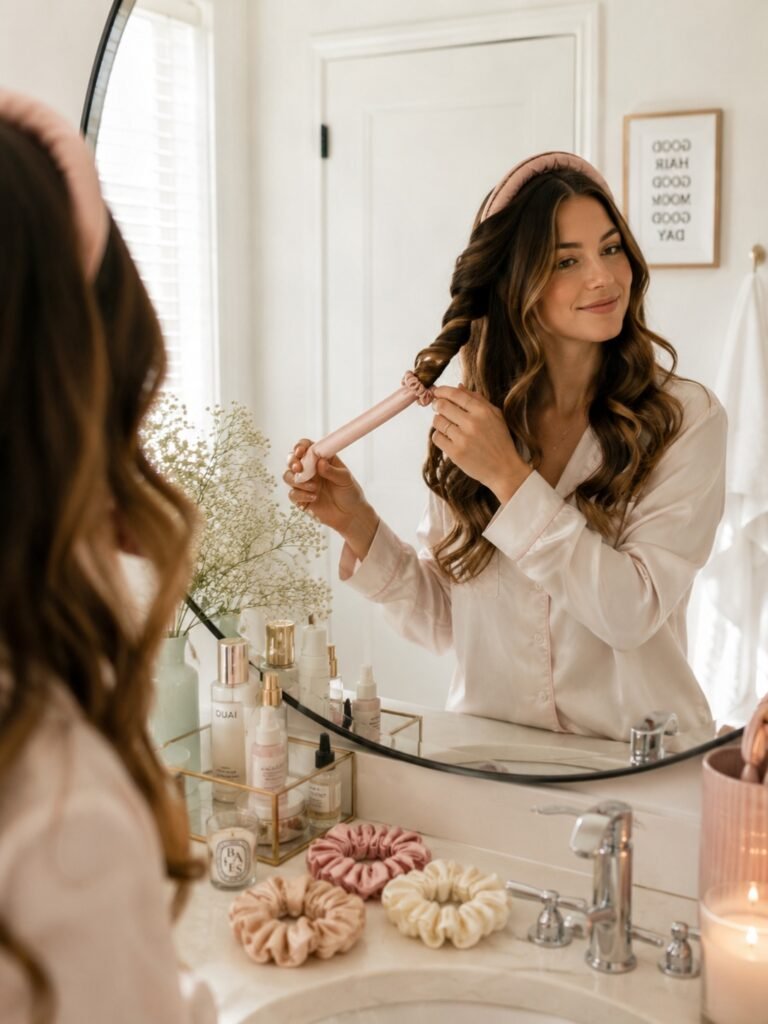
Heatless curlers are one of the best heatless hair finds if you want soft curls, bends, or waves without using a curling iron. They come in different styles, including satin curling rods, foam rollers, bendable rods, robe-style curlers, and soft rollers.
I like heatless curlers because they do the work while you sleep or while you get ready around the house. The result depends on your hair type, how damp your hair is, how large your sections are, and how tightly you wrap the hair.
Reducing curling iron use can be a smart move if your hair feels dry, brittle, or over-styled. The American Academy of Dermatology recommends limiting the time a curling iron touches your hair and using hot tools less frequently to help reduce damage.
What to Look For in Heatless Curlers
Choose heatless curlers that are:
- Soft enough to sleep in
- Smooth on the hair
- Easy to secure without pulling
- Long enough for your hair length
- Flexible enough for your preferred curl size
- Free from rough seams or exposed fasteners
If your hair is long or thick, look for a longer curling rod or a set with multiple pieces. If your hair is fine, a lightweight satin curler may feel more comfortable than bulky foam rollers.
How to Use Heatless Curlers
Start with dry or slightly damp hair. I do not recommend wrapping soaking-wet hair because it may not dry fully overnight.
Apply a light leave-in spray if your hair needs grip. Wrap sections around the curler, secure gently with satin scrunchies or soft ties, and sleep on a smooth pillowcase.
In the morning, remove the curler slowly, separate the curls with your fingers, and add a little smoothing product if needed.
Best for: soft waves, loose curls, long hair, medium hair, and anyone trying to use less heat.
2. Satin Scrunchies
Satin scrunchies are a small upgrade, but they can make a big difference in an overnight hair routine. They help hold hair without the same rough tugging you may get from tight elastics.
This matters because the American Academy of Dermatology warns that tight ponytails, buns, braids, cornrows, and extensions can pull on the hair and may cause breakage or hair loss over time.
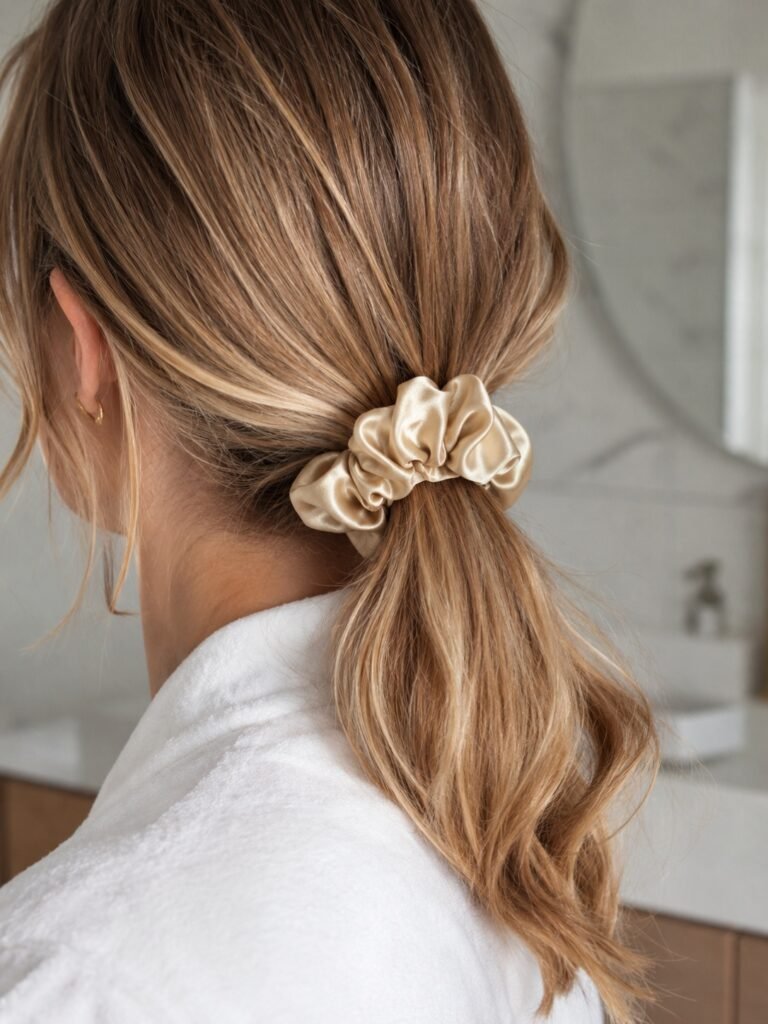
I like satin scrunchies for loose buns, low ponytails, pineapple hairstyles, and securing heatless curlers. They are also helpful if regular hair ties leave dents in your hair.
What to Look For in Satin Scrunchies
Look for satin scrunchies that are:
- Smooth to the touch
- Stretchy but not too tight
- Large enough for your hair thickness
- Soft at the seam
- Washable
- Secure without needing too many wraps
For thick hair, oversized satin scrunchies usually work better. For fine hair, smaller satin scrunchies may hold more comfortably without slipping.
How I Would Use Satin Scrunchies Overnight
Use a satin scrunchie to secure a loose top bun, hold the ends of a heatless curler, or create a low, loose ponytail before bed.
The keyword is loose. If your scalp feels pulled or your hairline feels tight, the style is too snug.
Best for: ponytails, loose buns, curly hair, thick hair, fine hair, heatless curls, and overnight styling.
3. Silk Pillowcase
A silk pillowcase is one of the easiest heatless hair finds because you do not have to learn a new styling method. You simply swap your regular pillowcase for a smoother sleep surface.
Silk pillowcases may help reduce friction between your hair and pillow. GoodRx notes that silk’s smooth surface may reduce friction, snagging, tangles, frizz, and breakage, while also explaining that research on silk pillowcase benefits is limited.
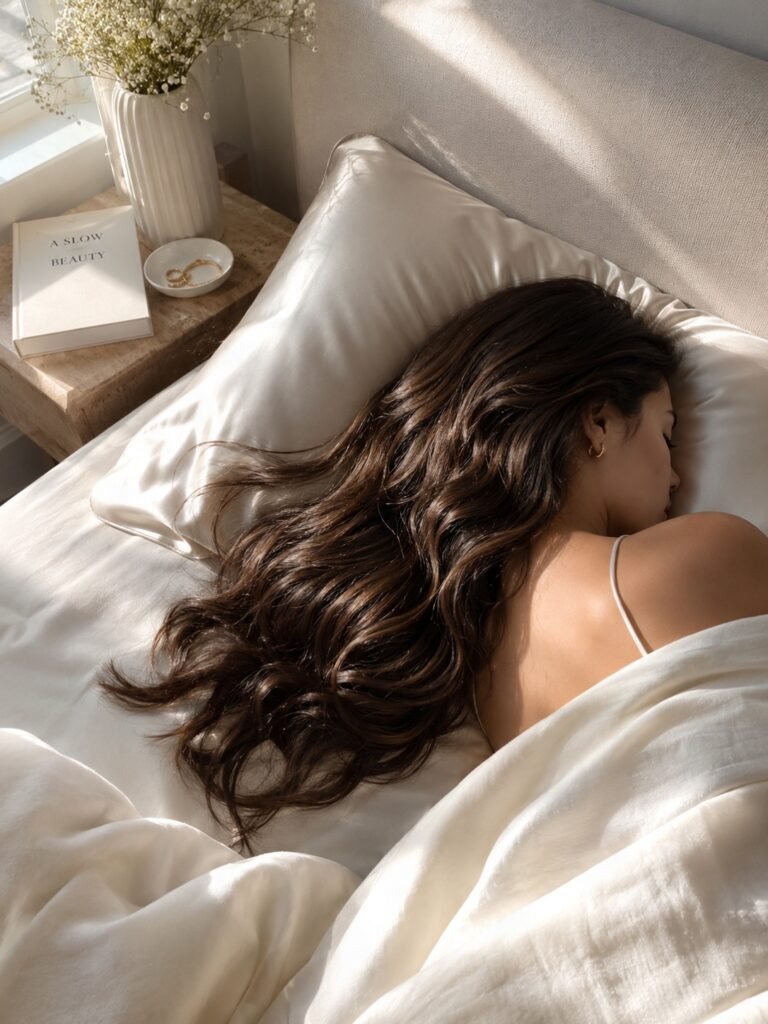
That honest detail is important. A silk pillowcase is not a miracle product, and it will not repair damaged hair or treat hair loss. But it can be a gentle upgrade if you wake up with frizz, tangles, or flattened curls.
Silk vs. Satin Pillowcase
Silk is a natural fiber. Satin is a weave that can be made from different materials, including polyester.
A satin pillowcase can still feel smooth and may be a more budget-friendly option, but it is not the same as a 100 percent silk pillowcase.
GoodRx recommends checking that a silk pillowcase is truly 100% silk and explains that silk is measured in momme, not thread count. It also notes that 19 to 22 momme is a quality range to consider.
What to Look For in a Silk Pillowcase
Choose a pillowcase with:
- 100 percent silk if you want real silk
- A zipper or envelope closure
- The right size for your pillow
- Clear care instructions
- Good stitching
- A color that works with your bedding
If silk is not in your budget, a satin pillowcase can still be a practical, smooth-surface option.
Best for: frizz-prone hair, curly hair, dry hair, color-treated hair, and anyone who wakes up with tangles.
4. Satin Bonnet or Hair Wrap
A satin bonnet or hair wrap can help protect your style overnight. This is especially useful if you toss and turn, sleep on your side, or have curls that lose shape by morning.
I like bonnets because they cover more of the hair than a pillowcase alone. They can be helpful for curls, braids, blowouts, twist-outs, roller sets, and heatless curls.
The fit matters. The goal is gentle protection, not tight compression. Since the American Academy of Dermatology recommends loosening hairstyles that pull on the hair, I would avoid bonnets or wraps that feel tight around the hairline.
What to Look For in a Satin Bonnet
Choose a bonnet or wrap with:
- A smooth satin lining
- A comfortable band
- Adjustable sizing if possible
- Enough room for your hair
- No rough seams near the hairline
If the bonnet leaves a deep mark on your forehead or pulls around your edges, it is probably too tight.
Best for: curly hair, textured hair, protective styles, heatless curls, and preserving volume overnight.
5. Microfiber Hair Towel
A microfiber towel is useful before heatless styling because it helps to absorb water without rough towel rubbing.
The American Academy of Dermatology recommends wrapping hair in a towel to absorb water instead of rubbing it dry, and it also recommends letting hair air-dry when possible.
This is one of the easiest swaps if your hair gets frizzy after wash day. A microfiber towel or soft cotton T-shirt can help remove excess water more gently before you set your heatless curls.
What to Look For in a Microfiber Hair Towel
Choose a towel that is:
- Lightweight
- Absorbent
- Soft on the hair
- Easy to twist
- Large enough for your hair length
- Machine washable
Avoid rubbing your hair aggressively with any towel. Blot, squeeze, or wrap instead.
Best for: wash days, frizz-prone hair, curly hair, long hair, and anyone who air-dries often.
6. Wide-Tooth Comb
A wide-tooth comb is a simple heatless hair find that helps with detangling, curl separation, and gentler styling.
The American Academy of Dermatology explains that wet hair can break more easily when combed or brushed, but people with tightly curled or textured hair may comb while wet to reduce breakage.
That means your detangling routine should match your hair type.
What to Look For in a Wide-Tooth Comb
Choose a comb with:
- Smooth teeth
- Rounded tips
- A sturdy handle
- No sharp seams
- A size that works for your hair thickness
Start detangling at the ends and work upward. Pulling from the roots can make knots tighter and cause unnecessary tension.
Best for: detangling, curly hair, thick hair, wash day routines, and separating heatless curls.
7. Leave-In Conditioner or Detangling Spray
A light leave-in conditioner or detangling spray can make heatless styling easier by adding slip and helping hair feel more manageable.
I would use a small amount before setting heatless curls, especially if the hair feels dry, tangly, or frizz-prone. The key is not to overdo it. Too much product can make curls fall flat or leave hair feeling heavy.
The American Academy of Dermatology recommends using conditioner after every shampoo because conditioner can improve the look of damaged or weathered hair by increasing shine, decreasing static, improving strength, and offering some protection from UV rays.
What to Look For in a Leave-In Product
Choose a leave-in that fits your hair type:
- Lightweight spray for fine hair
- Cream leave-in for thick or curly hair
- Frizz-control formula for humid weather
- Detangler for knot-prone hair
- Fragrance-free option if you are sensitive to fragrance
If you have a sensitive scalp or known allergies, review the ingredient list before use and stop using a product if irritation develops.
Best for: dry hair, frizz control, detangling, heatless curl prep, and second-day hair refreshing.
My Simple Heatless Night Routine
Here is the simple routine I would use for better morning hair:
- Detangle gently based on your hair type.
- Apply a small amount of leave-in conditioner if needed.
- Let hair dry until it is only slightly damp or fully dry.
- Wrap hair in heatless curlers, a loose bun, or a soft braid.
- Secure with satin scrunchies.
- Sleep on a silk or satin pillowcase.
- Remove everything gently in the morning.
- Shake out curls with your fingers.
- Add a tiny amount of smoothing product if needed.
The biggest mistake is starting with hair that is too wet. Slightly damp hair can work for some routines, but soaking-wet hair often takes too long to dry and may leave the result uneven.
For a gentler routine overall, the American Academy of Dermatology recommends air-drying when possible, using the lowest heat setting when needed, limiting how often hot tools are used, and avoiding styles that pull tightly on the hair.
Best Heatless Hair Finds by Hair Goal
For Loose Waves
Try heatless curlers, oversized satin scrunchies, and a silk or satin pillowcase.
For Less Frizz
Try a silk pillowcase, satin bonnet, microfiber towel, and leave-in conditioner. GoodRx notes that silk pillowcases may reduce friction, snagging, tangles, frizz, and breakage, though the evidence is limited.
For Better Curls in the Morning
Try a satin bonnet, wide-tooth comb, fine-mist spray bottle, and satin scrunchies.
For Fine Hair
Try a lightweight heatless curler, small satin scrunchies, and a light leave-in spray.
For Thick Hair
Try larger heatless curlers, oversized satin scrunchies, a roomy bonnet, and a large microfiber towel.
For Short Hair
Try soft rollers, a satin pillowcase, a sleep headband, and a lightweight detangling spray.
Common Mistakes to Avoid
Wrapping Hair Too Tight
Heatless styling should feel comfortable. If your scalp feels pulled, loosen the style.
Using Regular Elastics Overnight
Regular elastics can leave dents and pull on hair. Satin scrunchies are usually gentler.
Sleeping With Soaking-Wet Hair Wrapped Up
Damp hair may help create shape, but soaking-wet hair may not dry well overnight.
Skipping Detangling
Tangles usually look worse in the morning. Detangle gently before setting your hair.
Expecting Perfect Curls the First Night
Heatless curls take practice. You may need to adjust section size, dampness level, product amount, or curler style.
FAQ: Heatless Hair Finds
What are the best heatless hair finds for better morning hair?
The best heatless hair finds include heatless curlers, satin scrunchies, silk pillowcases, satin bonnets, microfiber towels, wide-tooth combs, and leave-in conditioner. Start with heatless curlers for shape, satin scrunchies for gentle hold, and a silk pillowcase for less friction.
Do heatless curlers really work?
Yes, heatless curlers can work, but results vary by hair type, hair length, dampness level, section size, and product use. They usually create soft waves or curls rather than the exact same finish as a curling iron.
Are satin scrunchies better for hair?
Satin scrunchies can be gentler than tight uncovered elastics because they are smoother and less likely to tug. They are especially helpful for loose buns, ponytails, and securing heatless curlers.
Is a silk pillowcase good for hair?
A silk pillowcase may help reduce friction, tangles, frizz, and breakage, but it is not a cure-all. GoodRx notes that evidence is limited, so it is best viewed as a helpful hair-friendly sleep upgrade rather than a guaranteed fix.
Should I use heatless curlers on wet or dry hair?
Use heatless curlers on dry or slightly damp hair. If your hair is soaking wet, it may not dry fully overnight and the curls may come out uneven.
What should I buy first for better morning hair?
If your hair is flat, start with heatless curlers. If your hair is frizzy, start with a silk or satin pillowcase. If your hair tie leaves dents or pulls, start with satin scrunchies.
Conclusion
Heatless hair finds are a smart way to make mornings easier without depending on hot tools every day. Start with the basics: heatless curlers for shape, satin scrunchies for a gentle hold, and a silk pillowcase for a smoother sleep surface.
I recommend choosing one or two finds based on your biggest morning hair problem. You do not need a complicated routine. Small changes, repeated consistently, can help your hair look smoother, softer, and more styled when you wake up.
If you notice ongoing breakage, scalp pain, thinning, or sudden hair loss, speak with a board-certified dermatologist or qualified healthcare professional.
Sources
- American Academy of Dermatology: Hair damage prevention and styling guidance: https://www.aad.org/public/diseases/hair-loss/insider/stop-damage
- American Academy of Dermatology: Healthy hair tips and conditioner guidance: https://www.aad.org/public/everyday-care/hair-scalp-care/hair/healthy-hair-tips
- GoodRx: Silk pillowcase benefits and limitations: https://www.goodrx.com/health-topic/dermatology/benefits-silk-pillowcase