
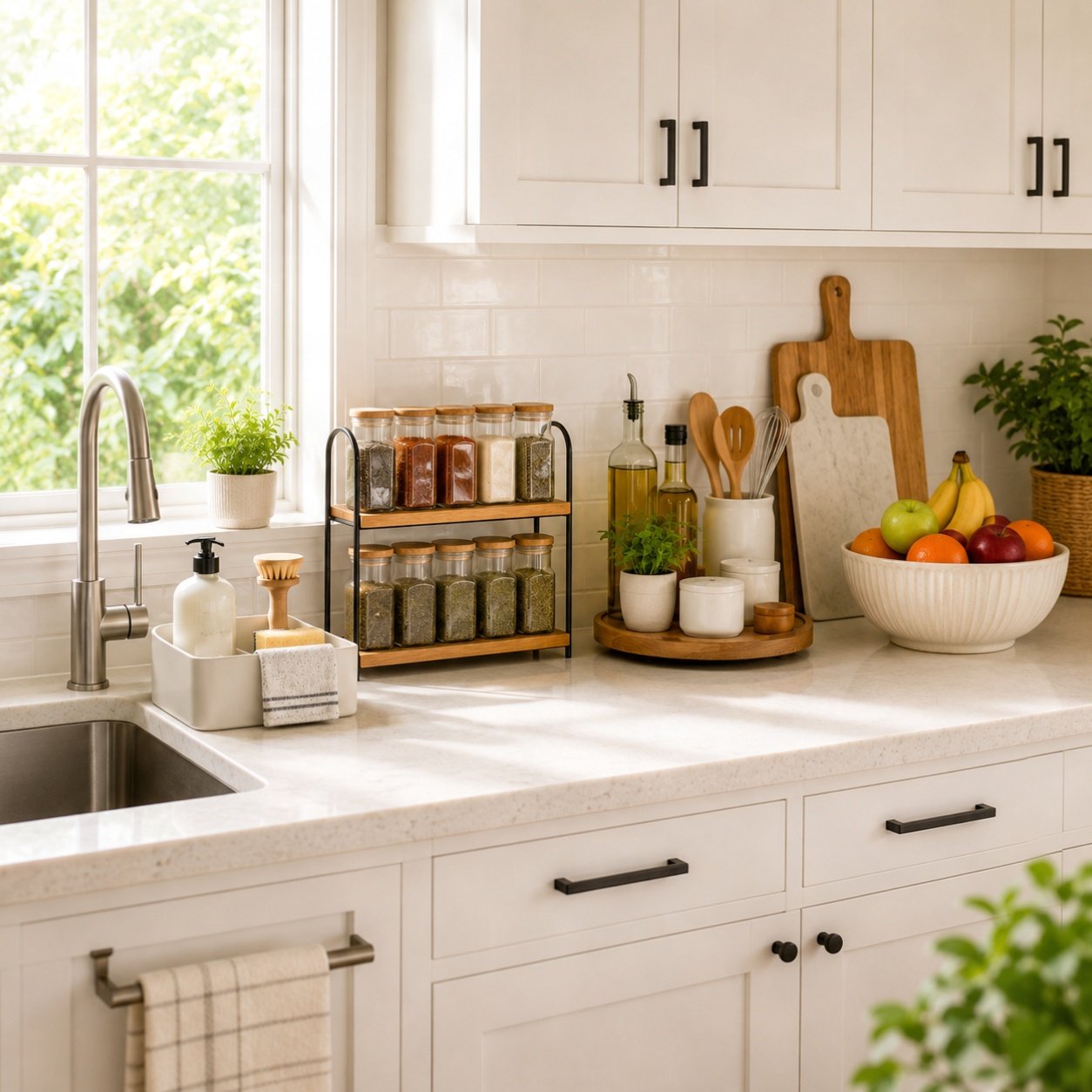
Kitchen counter organization ideas only work when they make your daily routine easier. A counter can look beautiful for one day, but if the system is too fussy, everything ends up back where it started: mail by the coffee maker, spices near the stove, dish soap around the sink, and random items collecting in every open corner.
In my experience, the best kitchen counter organization ideas are simple, visible, and easy to maintain. You do not need a perfect kitchen. You need smart zones, fewer loose items, and a few practical organizers like a sink caddy, spice rack, and lazy Susan.
Food safety matters here too. The FDA recommends the basic food safety steps of clean, separate, cook, and chill, including washing hands and surfaces often. That is one reason I like counter organization that keeps cleaning supplies, cooking tools, and food prep areas separated instead of crowded together.
Why Kitchen Counter Organization Matters
A clear kitchen counter makes cooking, cleaning, packing lunches, and making coffee feel easier. It also helps you see what actually belongs on the counter and what needs a better home.
The goal is not to remove everything. A kitchen should still feel useful. The goal is to keep only the items you use often and give each category a defined spot.
Before buying organizers, I recommend asking three questions:
- Do I use this item daily or almost daily?
- Does it make sense to keep it on the counter?
- Can I contain it in a tray, basket, caddy, rack, or turntable?
If the answer is no, it probably belongs in a cabinet, drawer, pantry, or storage bin.
1. Create a Sink Zone With a Sink Caddy
A sink caddy is one of the most practical kitchen counter organization ideas because the sink area gets messy fast. Dish soap, hand soap, sponges, scrub brushes, and bottle brushes can spread across the counter if they do not have a home.
I like a sink caddy because it keeps wet items contained and makes the sink area look more intentional.
Look for a sink caddy with:
- Drainage holes
- Rust-resistant material
- Space for a sponge and brush
- A removable drip tray
- Easy cleaning instructions
- A size that fits beside or behind your sink
This is also a good place to be thoughtful about cleanliness. NSF says its household germ study found that three of the top five germ hot spots were in the kitchen, with the kitchen sponge or dish rag listed as a major hot spot. A sink caddy will not sanitize your sponge, but it can help keep wet tools contained and easier to replace or clean.
My tip: keep only one sponge, one brush, and one soap bottle out if possible. Extras should go under the sink.
2. Use a Tray to Create a Countertop Drop Zone
A small tray can turn clutter into a controlled zone. This works well for items you reach for daily, such as hand lotion, a candle, a small plant, salt and pepper, or coffee supplies.
The trick is to keep the tray small. A large tray can become another clutter pile.
Good tray spots include:
- Beside the sink
- Near the coffee maker
- Next to the stove
- On a kitchen island
- In a corner that collects random items
I recommend choosing a tray that can be wiped clean. Wood looks warm, but metal, acrylic, stone, ceramic, or washable plastic may be easier near food prep areas.
3. Add a Spice Rack Near the Stove
A spice rack can make cooking easier when you use it for the seasonings you reach for most often. The mistake is trying to keep every spice on the counter.
I would keep only everyday spices out, such as salt, pepper, garlic powder, chili powder, paprika, cinnamon, or Italian seasoning. The rest can stay in a drawer, cabinet, or pantry.
A good spice rack should be:
- Easy to see
- Easy to clean
- Stable
- Close to your cooking zone
- Small enough for your counter
- Big enough for your most-used jars
Food safety matters around the stove, too. The FDA recommends keeping surfaces clean and separating raw meat, poultry, seafood, and eggs from foods that will not be cooked. I would avoid putting spice jars directly in messy prep zones where raw ingredients can splash or drip.
My tip: label the tops of spice jars if they sit in a drawer, and label the fronts if they sit on a countertop rack.
4. Use a Lazy Susan for Oils, Sauces, and Daily Ingredients
A lazy Susan is one of my favorite kitchen counter organization ideas because it makes small bottles easier to reach. Instead of knocking over olive oil, vinegar, hot sauce, and seasonings, you can spin the tray and grab what you need.
Use a lazy Susan for:
- Olive oil
- Vinegar
- Honey
- Hot sauce
- Cooking sprays
- Salt and pepper
- Coffee syrups
- Tea canisters
- Vitamins or daily supplements, if stored safely away from children
I recommend using a lazy Susan with a raised edge so bottles do not slide off. For cooking oils, place them away from direct heat and sunlight when possible.
My tip: if you have a small kitchen, use only one lazy Susan; more than one can make the counter feel crowded.
5. Make a Coffee or Tea Station
If you make coffee or tea every morning, a small beverage station can save time and reduce scattered items.
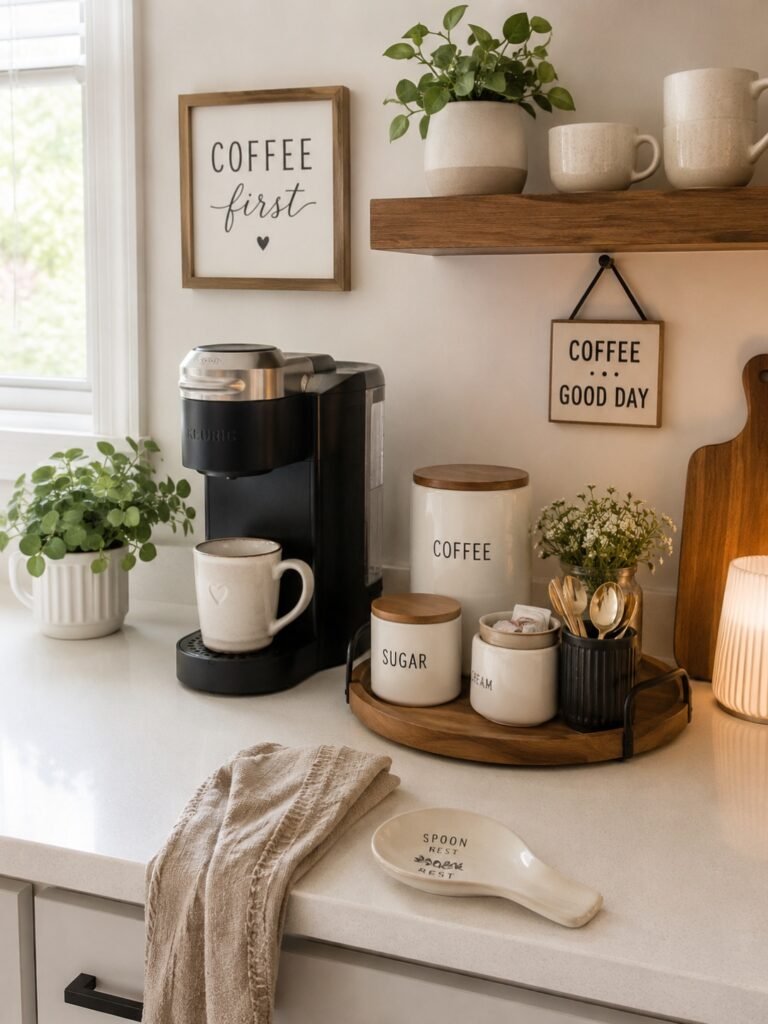
Keep the station simple:
- Coffee maker or kettle
- Mug tree or favorite mugs
- Coffee pods, tea bags, or filters
- Sugar, honey, or sweetener
- Spoon rest or small dish
- Napkins if you use them daily
A coffee station works best when everything fits in one zone. Use a tray, small basket, drawer insert, or narrow shelf to keep supplies contained.
If you have limited counter space, keep only the machine and one small container out. Store the rest in the cabinet above.
6. Use Vertical Space With a Counter Shelf
A counter shelf adds storage without taking up much extra space. This is useful if your counter is deep but crowded.
Use a counter shelf for:
- Mugs
- Small bowls
- Tea tins
- Spices
- Cookbooks
- Small jars
- Coffee supplies
I like counter shelves because they create levels. When everything sits flat on the counter, the space looks busier. A shelf gives items a more intentional home.
Choose a shelf that is sturdy and easy to wipe clean. Avoid placing heavy appliances on a shelf unless it is designed to support them.
7. Keep Cooking Utensils in One Crock
A utensil crock can work beautifully, but only if you edit it. Too many spatulas, spoons, whisks, and tongs can make the counter look messy and make the crock hard to use.
I recommend keeping only your daily cooking tools in the crock. Store backups, specialty tools, and duplicates in a drawer.
A good countertop utensil crock should be:
- Wide enough to avoid tipping
- Easy to clean
- Heavy enough to stay stable
- Close to the stove
- Not packed too tightly
My tip: if you have more than 10 to 12 tools in the crock, it is probably time to edit.
8. Use a Small Basket for Mail and Paper Clutter
Paper clutter is one of the fastest ways to ruin a clean kitchen counter. Mail, school forms, receipts, coupons, and appointment cards often land in the kitchen because it is the most active room in the house.
A small basket gives paper clutter a temporary home.
The keyword is temporary.
Use one basket for:
- Mail to sort
- Receipts
- School papers
- Coupons
- Notes
- Items that need action
Then set a simple rule: empty it once or twice a week. Without that habit, the basket becomes a permanent paper pile.
9. Create a Fruit Bowl That Actually Works
A fruit bowl can look pretty and encourage easy snacking, but it only works if it does not become overfilled.
Choose a bowl that fits your counter and your household. If you buy a lot of fruit, a tiered basket may work better than a wide bowl.
Good options for counter fruit include:
- Bananas
- Apples
- Oranges
- Lemons
- Limes
- Avocados that need to ripen
For food safety, the FDA recommends rinsing fresh fruits and vegetables under running tap water, including produce with skins and rinds that are not eaten. I like keeping a small fruit bowl visible, but I still wash produce before eating or cutting it.
My tip: do a quick fruit check every few days so one overripe piece does not spoil the whole bowl.
10. Store Cutting Boards Upright
Cutting boards can take up a lot of counter space when stacked flat. Storing them upright makes them easier to grab and helps the counter look cleaner.
Use a cutting board rack, file organizer, or vertical divider near your prep zone.
This also helps separate boards by use. USDA FSIS recommends using separate cutting boards for fresh produce and raw meat, poultry, and seafood when possible to reduce cross-contamination.
A simple setup:
- One board for produce and bread
- One board for raw meat, poultry, or seafood
- One board for serving, if you use one often
My tip: if you cannot remember which board is for which task, choose different colors or label the edge.
11. Keep Appliances Out Only If You Use Them Often
Small appliances can take over the kitchen counter quickly. Coffee makers, toasters, blenders, air fryers, stand mixers, slow cookers, and food processors all compete for space.
My rule is simple: if I use it daily or several times a week, it can stay out. If I use it occasionally, it goes in a cabinet, pantry, appliance garage, or nearby closet.
Appliances that often earn counter space:
- Coffee maker
- Toaster
- Electric kettle
- Air fryer, if used often
- Blender, if used daily
- Stand mixer, if too heavy to move often
If you have a small kitchen, choose the top two or three. Clear counter space is usually more valuable than keeping every appliance visible.
12. Do a Five-Minute Counter Reset Every Night
Even the best kitchen counter organization ideas will not work without a reset habit. A five-minute nightly reset keeps the system from falling apart.
Here is the simple routine I recommend:
- Put dirty dishes in the dishwasher or sink.
- Return food items to the pantry or fridge.
- Wipe the counter.
- Reset the sink caddy.
- Put mail in the paper basket.
- Straighten the tray, lazy Susan, and spice rack.
The CDC says surfaces should be cleaned before sanitizing or disinfecting because dirt can make it harder for chemicals to reach and kill germs. For everyday kitchen life, that means a quick wipe-down works best after clutter is cleared and crumbs are removed.
What to Keep on the Kitchen Counter
The best items to keep on the kitchen counter are the ones you use every day and can keep contained.
I would keep:
- Coffee maker or kettle
- Sink caddy
- Soap dispenser
- Small tray
- Utensil crock
- Spice rack with daily spices
- Lazy Susan for oils or sauces
- Fruit bowl
- One or two frequently used appliances
I would move:
- Extra mugs
- Backup spices
- Rarely used appliances
- Random paper piles
- Bulk snacks
- Extra cleaning supplies
- Duplicate utensils
- Seasonal decor that crowds the workspace
The counter should support cooking, cleaning, and daily routines. It should not become storage for everything that does not have a home.
Best Organizers for Small Kitchen Counters
Small counters need organizers that go vertically, rotate, or contain clutter tightly.
My favorite small-kitchen picks are:
- Narrow sink caddy
- Two-tier spice rack
- Small lazy Susan
- Slim tray
- Wall-mounted paper towel holder
- Magnetic spice tins, if they work for your space
- Vertical cutting board rack
- Small utensil crock
- Under-cabinet mug hooks
For a small kitchen, I would avoid oversized baskets and large countertop shelves. They can make the counter feel more crowded instead of more organized.
Common Kitchen Counter Organization Mistakes
Keeping Too Many Appliances Out
Every appliance takes space. If you do not use it often, store it somewhere else.
Buying Organizers Before Decluttering
Organizers help only after you know what you actually need to store.
Making the Counter Too Decorative
Decor is fine, but function should come first in a busy kitchen.
Ignoring the Sink Area
The sink is one of the hardest-working spots in the kitchen. A simple sink caddy can make a big difference.
Letting Paper Clutter Live on the Counter
Use a small basket, then empty it regularly.
Using a Spice Rack for Every Spice You Own
Keep daily spices nearby and store the rest elsewhere.
Quick Kitchen Counter Reset Checklist
Use this checklist when your counter starts feeling cluttered:
- Clear everything off one section at a time.
- Toss trash and expired papers.
- Move rarely used appliances.
- Group sink items in a caddy.
- Put daily spices in a spice rack.
- Add oils or sauces to a lazy Susan.
- Place paper clutter in one small basket.
- Store cutting boards upright.
- Wipe the counter.
- Return only the items you use often.
FAQ: Kitchen Counter Organization Ideas
How do I organize my kitchen counter?
Start by removing everything from the counter, then put back only the items you use daily. Use a sink caddy for dishwashing tools, a spice rack for everyday seasonings, a lazy Susan for oils or sauces, and a tray for small essentials.
What should be left on kitchen counters?
Keep items you use every day, such as a coffee maker, soap dispenser, sink caddy, utensil crock, fruit bowl, and a few frequently used cooking items. Store rarely used appliances and extra supplies in cabinets or pantry space.
How do I organize a small kitchen counter?
Use vertical and compact organizers. A narrow sink caddy, small lazy Susan, wall-mounted paper towel holder, slim tray, and upright cutting board rack can help you save space.
Is a lazy Susan good for kitchen counters?
Yes, a lazy Susan works well for oils, sauces, coffee syrups, tea canisters, and frequently used ingredients. Choose one with a raised edge so bottles stay contained.
Where should spices go in a small kitchen?
Keep the spices you use most often near the stove in a small spice rack, drawer insert, or cabinet shelf. Store backup spices or rarely used seasonings away from the counter.
How do I keep my kitchen counter clutter-free?
Create zones, use small organizers, and do a five-minute reset each night. The system works best when every item has a clear home.
Conclusion
Kitchen counter organization ideas that actually work are simple, realistic, and easy to maintain. A sink caddy keeps the dishwashing zone tidy. A spice rack makes cooking easier. A lazy Susan keeps oils, sauces, and daily ingredients within reach.
You do not need to clear every item off the counter. You just need to keep the right items out and contain them well.
Start with the area that bothers you most. If the sink area feels messy, add a sink caddy. If cooking feels chaotic, organize your spices. If bottles and sauces are scattered, try a lazy Susan.
A better kitchen counter is not about perfection. It is about creating a space that helps you cook, clean, and move through your day with less frustration.
Sources
- FDA: Safe Food Handling, including clean, separate, cook, and chill guidance: https://www.fda.gov/food/buy-store-serve-safe-food/safe-food-handling
- NSF: Clean the Germiest Home Items, including kitchen sponge and dish rag information: https://www.nsf.org/consumer-resources/articles/clean-germiest-home-items
- USDA FSIS: Cutting Boards guidance for reducing cross-contamination: https://www.fsis.usda.gov/food-safety/safe-food-handling-and-preparation/food-safety-basics/cutting-boards
- CDC: Cleaning and disinfecting guidance for household surfaces: https://www.cdc.gov/hygiene/about/when-and-how-to-clean-and-disinfect-your-home.html